

Historical Context of Iran-Israel Relations
The relationship between Iran and Israel, two nations with rich histories and complex political landscapes, has undergone significant transformation since the mid-20th century. The establishment of the state of Israel in 1948 marked a pivotal moment in the region, leading to initial cordial relations between Iran and Israel. At that time, under the reign of Shah Mohammad Reza Pahlavi, Iran recognized Israel and established diplomatic ties, viewing it as a potential ally against common adversaries, particularly those in the Arab world.
However, this relationship began to iran israel news unravel following the Islamic Revolution in 1979, which fundamentally altered Iran’s political landscape. The new regime, led by Ayatollah Khomeini, vehemently opposed Israel’s existence, labeling it as an illegitimate state. This period marked the beginning of a profound deterioration in bilateral relations, characterized by increasingly hostile rhetoric and policies. The Iranian government embraced a commitment to supporting movements opposed to Israel, notably Palestinian groups, further solidifying animosity.
Throughout the following decades, various key events exacerbated tensions within the Iran-Israel dynamic. The Iran-Iraq War in the 1980s, Israel’s 1982 invasion of Lebanon, and the rise of Hezbollah as a significant actor in the region were crucial in shaping perceptions and alliances. The complexity of the relationship intensified with issues such as Iran’s nuclear program, which has raised alarms in Israel and among its allies. Today, the iran israel news rivalry continues to center around ideological differences, regional influence, and security concerns, contributing to a fraught geopolitical climate that captures global attention. From a historical lens, the evolution of Iran-Israel relations highlights the intricate interplay of politics, religion, and nationhood that remains relevant in contemporary iran israel news.
Current Political Climate and Key Issues
The political landscape between Iran and Israel is characterized by a complex interplay of historical grievances, territorial disputes, and ongoing military tensions. Central to the current Iran Israel news narrative are Iran’s nuclear ambitions, which have escalated fears in Israel about regional security. Iran continues to advance its nuclear program, leading to heightened scrutiny and concern from international observers, particularly the United States and European allies. This situation has prompted Israel to adopt a more proactive military stance, including airstrikes against Iranian positions in Syria, aimed at disrupting arms transfers to militant groups such as Hezbollah.
In addition to the nuclear issue, Israel’s broader security strategy involves maintaining military superiority in a volatile region. The presence of Iranian forces near Israel’s borders poses what Israel considers an existential threat. Consequently, this has led to increased military expenditures and strategic alliances with other nations concerned about Iran’s influence, including the Gulf states and even nations outside the region, like India and the United States. These alliances represent a significant shift in Middle Eastern geopolitics, further complicating the Iran Israel news relationship.
Moreover, regional geopolitics play a crucial role in shaping the interactions of these two nations. The involvement of global superpowers—like the United States, which maintains a strategic partnership with Israel—exacerbates tensions. The U.S. has historically supported sanctions against Iran while offering military aid to Israel, reinforcing the asymmetrical balance of power. The ramifications of these dynamics extend beyond the two countries; they affect the livelihoods and security of civilians in both nations and can ignite broader conflicts across the Middle East.
Media Representation and Public Perception
The portrayal of Iran Israel news relations in global and regional media is a significant factor influencing public perception. Across various platforms, the narrative surrounding Iran Israel news tends to spotlight the political and military tensions that exist between these two nations. Media outlets often emphasize negative headlines, focusing on conflicts, threats, and military exchanges, which can contribute to a public perception that views both countries through a lens of hostility and adversarial relationships.
In particular, the representation of Iran often frames it as a regional aggressor, highlighting its support for militant groups and its nuclear ambitions. Conversely, Israel is typically depicted through the prism of its defense policies and responses to perceived threats, characterized as a nation acting under siege. This binary portrayal neglects the complexities of the geopolitical landscape and oversimplifies the motivations behind each country’s actions.
Moreover, social media and alternative news sources have revolutionized the dissemination of information, allowing a diverse array of narratives to emerge regarding Iran Israel news. These platforms empower individuals and smaller organizations to express opinions, share personal experiences, and disseminate news that may not align with mainstream media interpretations. As a result, public discourse around Iran Israel news relations can be skewed based on the sources consumed. Viral content can either exacerbate misunderstandings or foster dialogue between segments of the populations of both countries.
In understanding the dynamics of media representation, it becomes clear that the narratives shaped by the news are not just informative but also influential in molding public attitudes. As global audiences consume these representations, the potential for misunderstanding increases, perpetuating cycles of tension that are often reflected in international relations. Therefore, a critical appraisal of how Iran and Israel are depicted in media is essential for fostering a more nuanced understanding of their complex interactions.
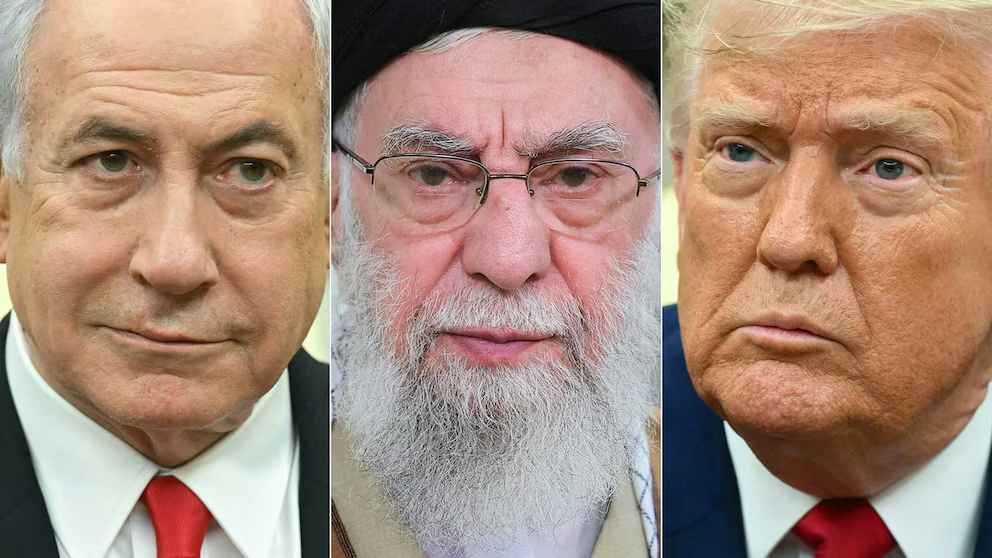
Future Prospects and Potential Resolutions
The future of Iran-Israel relations remains iran israel news a topic of intense speculation and analysis, with numerous potential scenarios unfolding before us as geopolitical dynamics evolve. Historically characterized by hostility and confrontation, the two nations could explore pathways to peace through comprehensive diplomatic negotiations. The resurgence of negotiations surrounding Iran’s nuclear program exemplifies how international involvement, especially from the P5+1 countries, can facilitate dialogue. Mediation by global powers could lead to a framework that not only addresses Iran’s nuclear ambitions but also includes Israel’s security concerns, fostering an environment conducive to lasting peace.
Engagement in multilateral dialogues, involving countries like the United States and European nations, may encourage both Iran and Israel to reconsider their positions. A focus on collaborative efforts to tackle common regional threats, such as terrorism, could foster trust and pave the way for a more secure Middle East. The potential for establishing economic ties, cultural exchanges, or joint ventures in fields such as technology and environmental sustainability could serve as confidence-building measures, gradually transforming adversarial relations into cooperative engagement.
Furthermore, the roles of other regional actors, such as Saudi Arabia and the United Arab Emirates, in stabilizing the Middle East could significantly influence Iran Israel news relations. Their shifting stances towards normalization with Israel demonstrate a changing regional landscape that, if leveraged effectively, may facilitate smoother dialogue between Tehran and Tel Aviv. Nevertheless, it is essential to acknowledge that these prospects hinge upon the continuous evolution of international politics, including shifts in the balances of power and the influence of external actors.
In conclusion, while many uncertainties persist, the potential pathways toward conflict resolution and improved relations between Iran and Israel hinge on proactive engagement, regional cooperation, and thoughtful international mediation. The nature of future Iran Israel news will depend significantly on how these complex dynamics unfold in the foreseeable future.
